
The video provides a detailed look into the middle section of the Lotus Evora, covering the tub, fuel tank, seats, door panels, switches, instrumentation, and dash, highlighting differences between the original model and the 400 series.
Here's a breakdown of the key points:
The Tub:
Manufactured from aluminum using a process first seen in the Elise, bonded with rivets and epoxy adhesive.
It's stiffer than the Elise and Exige tubs.
Cannot be welded due to anodization and heat changing alloy properties.
Weighs 105 kg.
No repairs should be attempted on a damaged tub; only a partial body replacement from the factory is an option.
Has an eight-year corrosion warranty from the inside out.
Pipework for cooling, brakes, clutch, oil, and power steering is attached to the tub using stainless steel brackets and soft rubber mounts.
Fuel Tank:
Located under the rear seats and made of stainless steel, fully baffled.
Submerged fuel pump and level sender assembly.
Different flow rates for normally aspirated and supercharged cars.
On 400 series cars, the Bosch pump requires tank removal for replacement, a 4.5-hour job.
Seats:
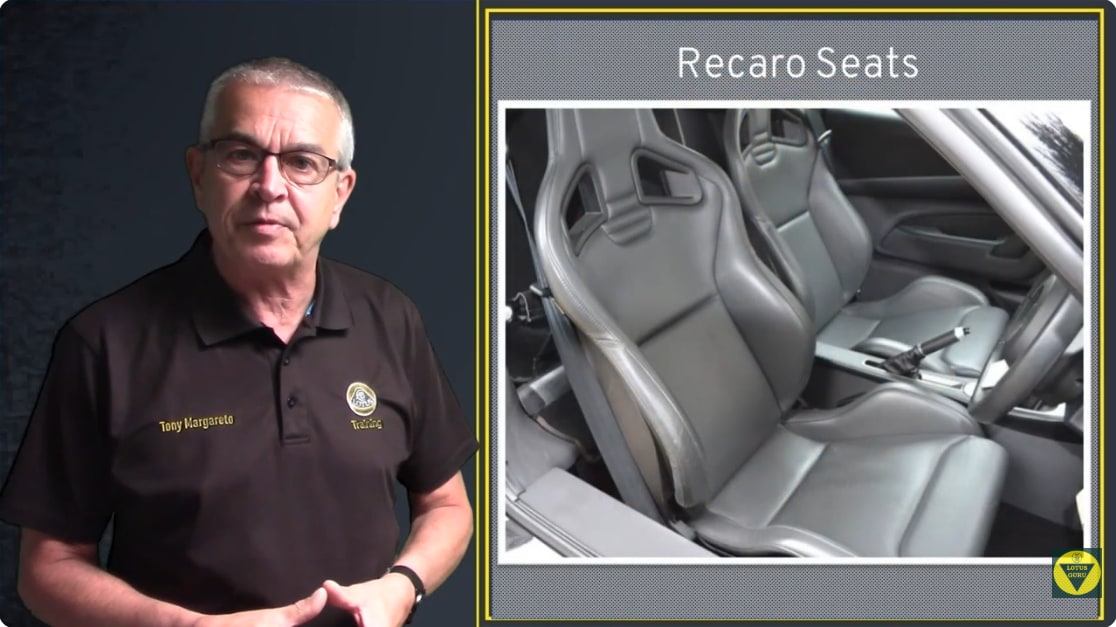
Original Evora had Recaro seats, but Recaro wouldn't supply bare frames.
Rear seats are impractical for adults.
The 400 series cars switched to Sparco seats and had issues with the backrest release strap breaking, creaking, and clicking, which were later rectified.
Door Panels:
Complex construction with many screws, clips, and tape, leading to a less than high-quality fit and finish on the original.
Improved fit and finish on the 400 series, but still prone to damage if removed incorrectly.
Seals and window sills are not considered premium, and early models suffered from water leaks.
Dash, Switches, and Instrumentation:
Steering Wheel is flat-bottomed and made of magnesium. Cruise control switches are not illuminated.
Column Stalks and Ignition Switch are sourced from a 1998 Ford Focus, still present in the 400 series.
Fascia Switches were bespoke, metal, and illuminated but obscured by the steering wheel and all the same size, leading to ergonomic issues.
Electric Mirror Adjuster is a Proton part and poorly placed.
HVAC Controls are bespoke but lack automatic climate control.
Instrumentation supplied by Pectron, bespoke, but suffered from reflections due to mounting angle and is not serviceable.
Entertainment System was an off-the-shelf Alpine unit. Early cars had poor radio reception due to an internal antenna.
The Dash Fascia Panel was a complicated, multi-panel item. Early cars had issues with leather shrinking and tearing at the windscreen joint and warping airbag covers due to heat. These were rectified with running changes.
The 400 series dash is still made of multiple panels but is better executed and easier to remove. It includes bespoke switches, a relocated mirror control (now from a Vauxhall Corsa), and a start button.
The speaker concludes that the 400 series, despite marketing claims of being "all new," was essentially a facelifted Evora with modified elements. He expresses hope that the new Emira will undergo more thorough development and testing to avoid similar issues.
